Last updated November 25, 2026
The Complete Guide to ADUs in Rancho Cordova
Most homeowners in Rancho Cordova start with a search for “ADU rules California” and end up with a stack of state law that doesn’t match their lot. Here’s the part that surprises people: whether your property sits under Sacramento County jurisdiction or inside the City of Rancho Cordova can change which permit counter you walk into, which development standards apply, and how long your approval takes. That single jurisdictional fact sits underneath every other decision you’ll make about setbacks, height, and occupancy. This guide treats Rancho Cordova as the specific regulatory environment it is, not a stand-in for a generic California city. You’ll learn the four ADU types that work here, how recent state laws reshaped setbacks and height, where owner-occupancy actually stands, and how to self-sort your lot before you ever call a contractor.
Quick Answer
An ADU in Rancho Cordova is a secondary dwelling on a single-family lot, and whether you build a detached unit, an attached addition, a garage conversion, or a JADU depends mostly on your lot size, your existing structures, and which jurisdiction reviews your plans. Rancho Cordova parcels fall under either the City of Rancho Cordova or Sacramento County, and that determines your setback rules, height limits, and permit pathway. State law (including AB 2221 and SB 897) pushed many standards toward ministerial approval, but the local overlay still decides the details, so confirming jurisdiction is always step one.
Table of Contents
- Which Jurisdiction Reviews Your ADU?
- The Four ADU Types Available in Rancho Cordova
- How AB 2221 and SB 897 Changed the Rules
- The Owner-Occupancy Landscape After 2020
- Decision Tree: Which ADU Fits Your Lot?
- Prefab vs. Custom: Choosing Your Path
- Permits, Design, and Construction Under One Roof
- Common Mistakes to Avoid
- When to Call a Professional
- Frequently Asked Questions
Which Jurisdiction Reviews Your ADU? The Question That Comes First
Before setbacks, before height, before you sketch a single square foot, you need to know who is reviewing your plans. Rancho Cordova is a mix of incorporated city parcels and unincorporated Sacramento County land, and the two have their own planning and building departments, their own submittal requirements, and their own interpretation of how state ADU law applies on the ground. A homeowner who assumes “I’m in Rancho Cordova, so the city handles it” can spend weeks preparing a submittal for the wrong counter.
In our experience, this is the most common early misstep on Rancho Cordova ADU projects. The fix is simple: pull your parcel number and confirm jurisdiction before you do anything else. Your property tax bill or the county assessor’s parcel viewer will tell you which agency has authority. Once you know, the rest of the path sharpens quickly.
Here’s what changes based on jurisdiction:
- Which permit counter you submit to. City of Rancho Cordova versus Sacramento County each has its own intake process, forms, and reviewer assignments.
- Which development standards apply. Setbacks, height limits, lot coverage, and parking requirements can differ between the city’s municipal code and the county’s ordinance.
- How ministerial review is handled. State law requires most ADUs to be reviewed ministerially, but each agency runs that process its own way.
- Your realistic schedule. The time from submittal to approval is set by the reviewing agency’s workload and completeness checks, not by the state law alone.
If you’re not sure where your parcel sits, that’s the exact question to bring to us. Our ADU Builder Rancho Cordova team confirms jurisdiction and ordinance for your specific property before plans are drawn. It’s the first line item, not an afterthought.
The Four ADU Types Available in Rancho Cordova, Mapped to Lot Size
Rancho Cordova lots are not uniform. The city grew up over several decades, and the housing stock ranges from mid-century ranch homes on generous lots to newer subdivisions where buildable side and rear yards are tighter. That range is exactly why the “right” ADU depends on the lot, not on what’s trending.
Detached ADU
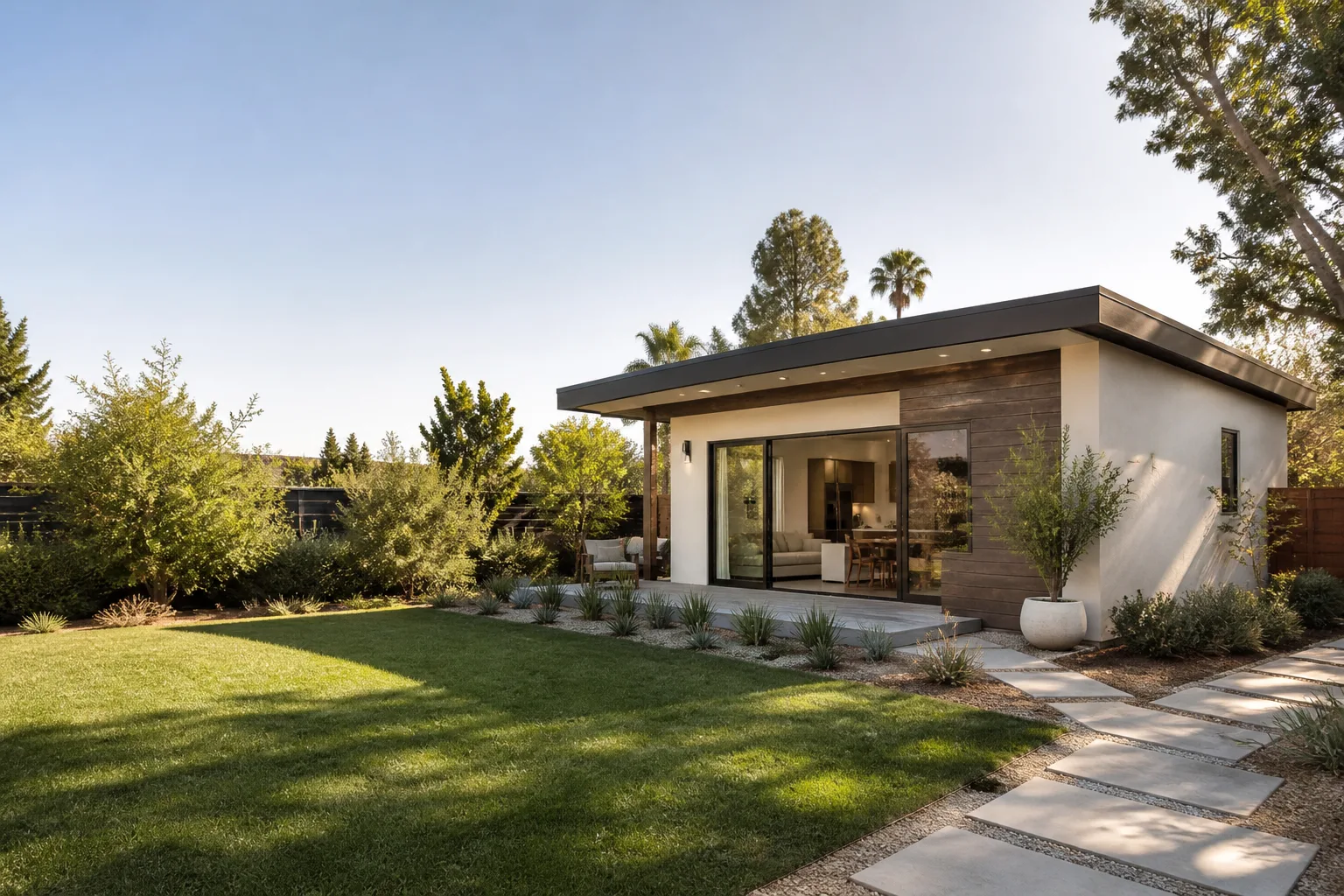
A freestanding unit in the backyard. This is the format most homeowners picture first, and it typically needs the most rear yard space and the most buildable footprint. Detached ADUs suit larger lots where you can meet setback requirements while keeping usable outdoor space. Lot size minimums are enforced locally, and those minimums vary by jurisdiction, so confirming the number for your parcel matters.
Attached ADU
An addition to the existing house that functions as a separate dwelling. Attached units work well on lots that can’t accommodate a freestanding structure but can support a rear or side addition. They typically share the existing foundation and utility runs, which can simplify some site work.
Garage Conversion
Converting an existing garage into a living unit. This is often the fastest path because the structure and foundation already exist. It’s also the type most dependent on the garage’s current condition, ceiling height, and how the driveway and parking are handled. A garage conversion is a strong fit on smaller lots where a detached unit wouldn’t meet setback requirements.
Junior ADU (JADU)
A smaller unit contained entirely within the footprint of the existing house, usually carved out of an underused bedroom, den, or interior space. A junior ADU is the lightest-touch option, and it’s often the right call when the lot can’t support anything else but the house has a few hundred square feet to spare. JADUs come with their own occupancy and facility rules, so confirmation with the reviewing agency is essential.
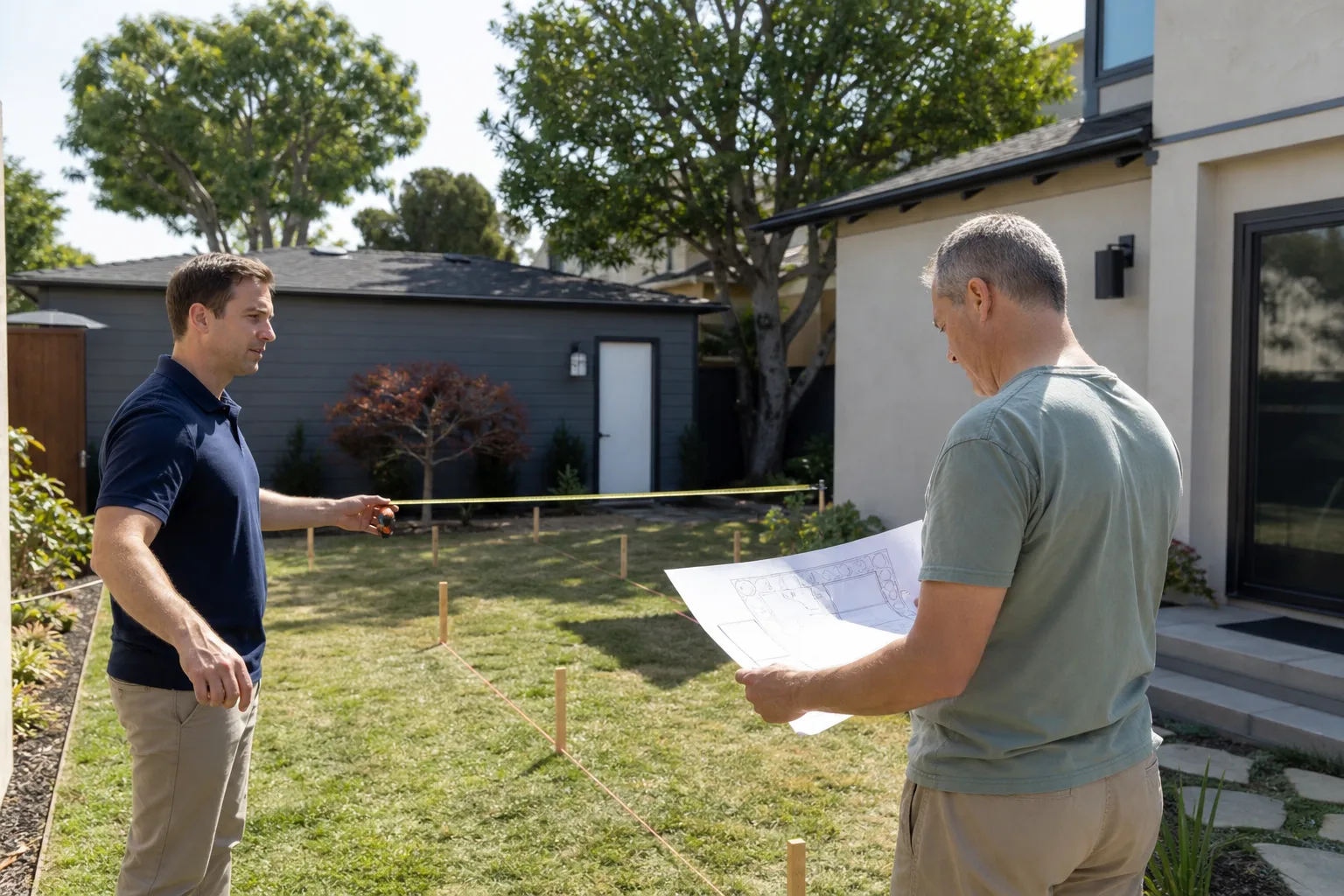
Mapping type to lot is the work of a single site visit. We’ve helped homeowners realize a detached unit they had their heart set on wouldn’t clear setbacks, but a garage conversion on the same lot was ready to draw.
How AB 2221 and SB 897 Changed the Rules (And What Applies Here)
Two pieces of state legislation reshaped the ADU landscape in ways that directly affect Rancho Cordova lots. Understanding the direction of travel matters before you assume a setback or height limit is the final word.
What AB 2221 Did
AB 2221 tightened the definition of what counts as an ADU and clarified that local agencies must act on ADU applications within defined timelines and review them ministerially. In practice, this means most ADU permits are approved on procedural grounds, not through discretionary design review. For a Rancho Cordova homeowner, the takeaway is that a compliant project has a clear legal path to approval, even when the local counter doesn’t signal it up front. The emphasis is on whether your plans meet the standards, not whether a reviewer finds them aesthetically agreeable.
What SB 897 Did
SB 897 pushed on height and setback limits. It raised allowable heights for certain ADUs and reduced or removed some setback requirements that had blocked projects on tighter lots. The rule that matters here: state law sets a floor for local standards, but it doesn’t erase every local ordinance. Rancho Cordova and Sacramento County each apply their own development standards within the framework state law sets. Some of those local standards are more permissive than state law requires, and some are tightened to the state minimum. Both are legal. Only a jurisdiction check on your specific parcel tells you which applies.
The Practical Takeaway
Don’t assume the state law headline is the whole story. The way it plays out:
- Confirm which agency reviews your parcel (City of Rancho Cordova or Sacramento County).
- Ask that agency for its current ADU development standards for your zoning district.
- Compare those standards to the state minimums and note which ones are stricter.
- Design to the stricter set to avoid redesign cycles.
Permit delays are the leading reason ADU projects stall. Our team treats that steps-process as a core service and manages it directly, so you’re not the one waiting on hold to ask which standard applies.
The Owner-Occupancy Landscape After 2020
State law changed in 2020, and the change is bigger than most homeowners realize. For many ADUs, the pre-2020 requirement that an owner live on the property is no longer in force. That opens a path to renting both the main house and the ADU, which is a meaningful shift for Rancho Cordova owners thinking about rental income and long-term property value.
Here’s the real-world nuance. State law removes the owner-occupancy condition for permitted ADUs in most cases, but the specifics depend on the ADU type and how the local agency applies the rules. JADUs often carry a different occupancy condition than detached or attached ADUs. If rental income is part of your plan, it’s worth understanding the distinction before you commit to a format.
What to confirm before you build:
- The ADU type you’re planning. JADU, detached, attached, and garage conversion each have their own occupancy treatment under state and local rules.
- The jurisdiction’s interpretation. City of Rancho Cordova and Sacramento County apply state law to their own parcels, and their written guidance is the document to read.
- Any rental rules that come with the parcel. Rental rules are set locally and change over time, so they’re confirmed with the reviewing agency as part of your project.
For multigenerational households, the question is often simpler: can a parent or adult child live in the unit while the owner lives in the main house? The answer is generally yes, and that’s the use case most Rancho Cordova families start with. The rental picture is a natural next question, and it’s one we work through with clients during design.
Decision Tree: Which ADU Fits Your Lot?
You don’t need to become a permit expert to understand which type suits your property. You need a way to self-sort before you invest in a design. Use this decision tree as a starting point, then confirm with us or the reviewing agency.
Start Here
- Confirm jurisdiction. Is your parcel in the City of Rancho Cordova or unincorporated Sacramento County? Everything else depends on this answer.
- Measure your buildable area. Look at rear and side yards with current setbacks in mind. Setbacks for ADUs have loosened under state law, but the specific numbers depend on your zoning district.
- Check the existing garage. Does the garage have adequate ceiling height and condition to convert? If yes, a garage conversion is often the most direct path.
- Look inside the house. Is there underused interior square footage (a den, an extra bedroom) that could become a JADU? This is the lightest-touch option.
- Assess rear yard for a detached unit. Does the lot give you enough room to place a freestanding structure while meeting setbacks and keeping usable outdoor space?
- Consider an attached addition. If rear yard won’t support a detached unit but the house has room to grow, an attached ADU may be the fit.
How to Read Your Result
- Larger lot, clear rear yard: Detached ADU is usually the strongest option for privacy and rentability.
- Existing garage in good condition: Garage conversion usually wins on speed and cost.
- Interior space to spare, smaller lot: JADU is often the right call.
- Tight rear yard but room for an addition: Attached ADU becomes the practical path.
- Unclear on any of the above: That’s the moment to bring in someone who does this every day.
We’ve walked this decision tree on dozens of Rancho Cordova lots. The result often surprises the homeowner, and it’s usually the result they’re happiest with once they see the plan.
Prefab vs. Custom: Choosing Your Path
Once you know which ADU type fits, the next decision is how it’s built. There are two broad paths, and both are viable in Rancho Cordova.
Prefab and Modular ADUs
Factory-built ADUs come with predictable construction timelines and costs because the unit is manufactured in a controlled environment and then installed on site. The site work, foundation, utility connections, and permitting still happen locally, but the unit itself arrives largely complete. We work with Abodu and Cover, two of the most recognized prefab ADU brands on the market, and we can compare those options to custom construction so you’re choosing with real information rather than marketing.
Custom Construction
A site-built ADU gives you design freedom: exact dimensions, finishes, rooflines, and layouts tailored to your lot and your plans for the space. Custom construction is the right path when the standard prefab footprint doesn’t fit your setback envelope, or when you want the ADU to visually match the main house. The trade-off is more design time and a longer construction phase.
How to Choose
- Choose prefab when schedule and cost predictability are your top priorities and a standard footprint fits your lot.
- Choose custom when the site is irregular, when you need specific dimensions, or when design cohesion with the main house matters.
- Consider both when your lot could support either path. We walk clients through prefab and custom side by side so the comparison is apples to apples.
Abodu, Cover, or fully custom: we’ll show you what fits your lot and your budget. We don’t push one path over the other. The lot and the plan decide.
Permits, Design, and Construction Under One Roof
An ADU project involves three distinct phases, and they have to talk to each other. Design work that ignores permit constraints creates redesign loops. Permit submittals that don’t match the construction plans cause corrections. Construction that starts before permits are final stalls on the first inspection.
We run these three phases as one service:
- Design. We design to your parcel’s actual standards, not a generic template. That includes confirming jurisdiction, checking setbacks, and reviewing the existing structures on site.
- Permit filing and management. We prepare and file the submittal, respond to reviewer comments, and track the approval through to issued permit. This is a defined service, not a favor thrown in at the end.
- Construction. We build the unit, coordinate inspections, and carry the project through to final sign-off.
Handling all three phases as one team eliminates the coordination gap that stalls most ADU projects. When design and construction are separate contractors, every design revision becomes a negotiation and every permit correction becomes a delay nobody owns. When they’re one team, the corrections get fixed and the project moves.
If you only need design and permit services and plan to build later or with another builder, we offer that as a standalone engagement. It’s a real option, not a foot in the door. Our ADU builders team can scope design-and-permit-only work just as cleanly as a full build.
One thing we don’t do: unrelated remodeling work. We specialize exclusively in ADU-related construction. That focus is deliberate. It means every plan we draw has already met the ADU reviewers before, and every construction detail is one we’ve solved on an ADU job. ADUs are all we do, every format, every step.
Common Mistakes to Avoid
- Assuming the city handles every Rancho Cordova parcel. Some parcels fall under Sacramento County jurisdiction, and submitting to the wrong agency wastes weeks. Confirm your parcel number before anything else.
- Designing before checking setbacks. A beautiful plan that violates the setback envelope for your zoning district gets pushed back at intake. Establish the buildable area first, then design.
- Treating permit management as an afterthought. Permit delays are the leading reason ADU projects stall. Build the management of the permit into your plan from day one, not after the first correction notice.
- Choosing an ADU type before assessing the lot. Homeowners often decide on a detached ADU before realizing the garage conversion is faster and cheaper. Let the lot decide the type, not the other way around.
- Assuming the state law overrides every local standard. AB 2221 and SB 897 set state floors, but local ordinances fill in the details. Confirm which standards apply on your parcel.
- Comparing prefab and custom without real numbers. Prefab pricing and custom pricing are structured differently, and a quick comparison can mislead. Walk through both paths with someone who builds both.
- Missing the owner-occupancy rules for the specific ADU type. The occupancy condition for a JADU can differ from a detached unit. If rental income is part of your plan, confirm the rules before design.
When to Call a Professional
Some ADU questions answer themselves with a quick lookup. Others need a site visit and a jurisdiction check before a number makes sense. Call us when:
- You don’t know whether your parcel is under City of Rancho Cordova or Sacramento County jurisdiction, and the answer will shape your entire project.
- You’ve picked an ADU type but haven’t confirmed it fits your setbacks and lot size.
- You want a real comparison between prefab and custom before you commit to a design.
- You’ve started a permit and hit a correction notice you don’t understand.
- You’re weighing rental income, multigenerational living, or property value, and need the ADU type that serves that goal.
Our technicians have up to 12 years of experience on ADU construction, design, and permit management. ADU Builder Rancho Cordova offers free estimates in Rancho Cordova. Call (279) 321-8660 to schedule yours. We answer 24/7. Fast dispatch from 7am to 7pm, Sunday through Friday.
Frequently Asked Questions
ADU costs in Rancho Cordova vary by type, size, and site conditions, and there’s no honest single number without a site visit. A garage conversion typically costs less than a detached unit because the structure and foundation already exist. Prefab units often come in at more predictable numbers than custom construction because the unit cost is fixed at the factory. The written estimate from your contractor is the final number, and any honest quote will break it down line by line. Call (279) 321-8660 for an exact quote; estimates are free.
Yes. Every ADU in Rancho Cordova requires a permit, whether you’re building a detached unit, an attached addition, a garage conversion, or a JADU. The permit is issued by whichever agency has jurisdiction over your parcel, the City of Rancho Cordova or Sacramento County. Some ADUs are reviewed ministerially under state law, which means approval is based on meeting the standards rather than passing discretionary design review. We file and manage the permit process as a defined service, so call (279) 321-8660 with your parcel number and we’ll confirm the pathway.
Often, yes. Smaller lots usually rule out a detached unit but still support a garage conversion or a JADU, and both are common on Rancho Cordova properties with tighter yards. SB 897 loosened some setback standards that had blocked projects on smaller lots, but the specific numbers depend on your zoning district. The way to know is a site visit and jurisdiction check. Call (279) 321-8660 for a free estimate and we’ll confirm what your lot supports.
In most cases under current state law, no owner-occupancy is required for permitted ADUs, which means you can rent both the main house and the ADU. That’s a change from the pre-2020 rules. However, the specifics depend on ADU type, and JADUs often carry a different occupancy condition than detached or attached units. If rental income is part of your plan, confirm the rules for your specific project with the reviewing agency. Call (279) 321-8660 and we’ll walk you through the occupancy landscape for your ADU type.
The timeline depends on the ADU type, jurisdiction, design complexity, and permit review load, and any honest contractor will tell you that the schedule is set in the written estimate, not promised upfront. Prefab units usually move faster through construction because the unit is built in a factory while site work happens in parallel. Custom construction takes more design and build time. The single biggest variable is permit review, which is why we manage that process directly. Call (279) 321-8660 for a schedule estimate based on your specific project.
We pull permits as part of our full-service scope. Permit filing and management is a defined service, not something left to the homeowner to navigate alone. Design, permit filing, and physical construction all happen under one roof with our team. If you only need design and permit services and plan to build separately, we offer that as a standalone engagement too. Call (279) 321-8660 to talk through which scope fits your project. Estimates are free.
The Bottom Line
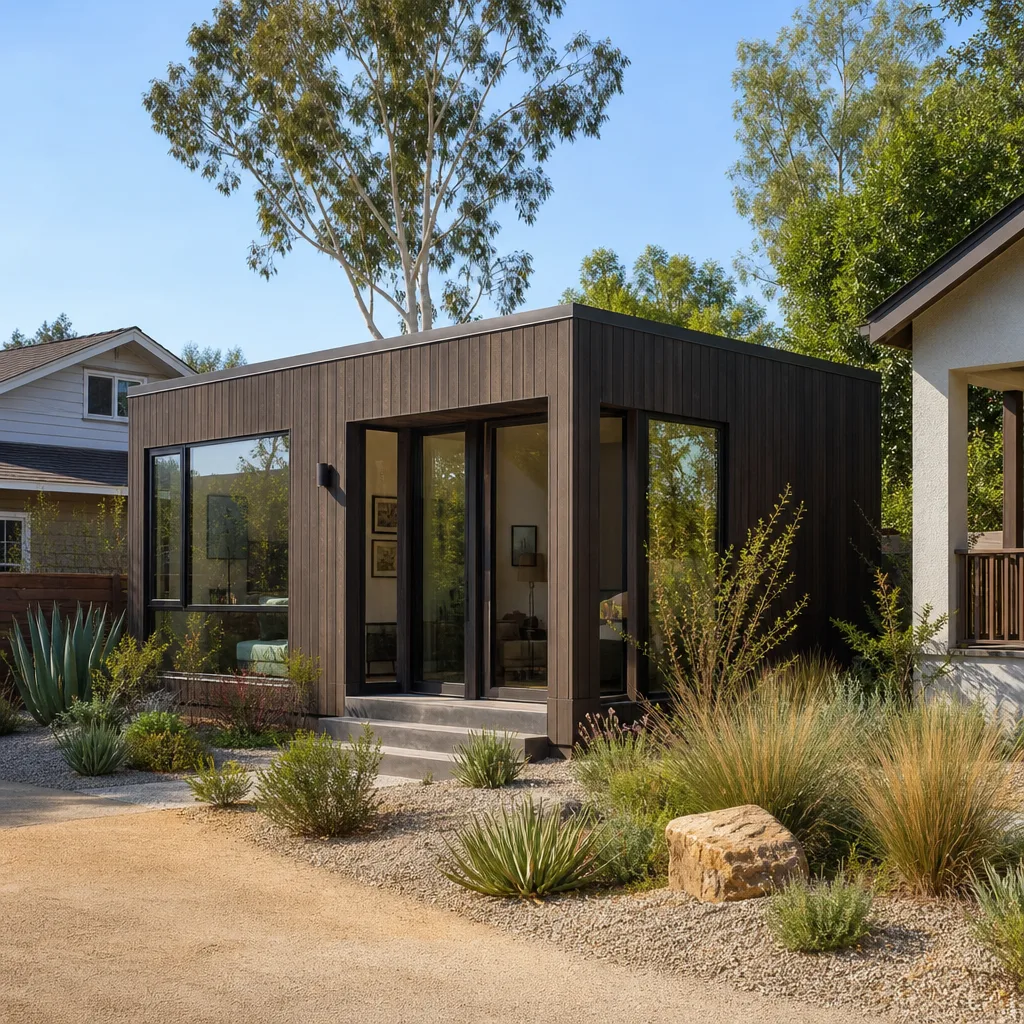
ADUs in Rancho Cordova are viable on more lots than most homeowners assume, but the path differs from city to city and parcel to parcel. The single fact that changes your entire project is jurisdiction: City of Rancho Cordova versus Sacramento County, each with its own planning counter, development standards, and review process. Confirm that first, then match the ADU type to your lot: detached for larger lots, garage conversion for existing garages, JADU for interior space, attached for rear additions. State law under AB 2221 and SB 897 opened doors, but local standards still fill in the details. Choose between prefab and custom based on your site and your goals, and manage the permit as a core part of the project. That’s the path that tends to finish.
Call (279) 321-8660 for a free estimate. We answer 24/7. Fast dispatch from 7am to 7pm, Sunday through Friday. From blueprint to building permit to finished unit, handled.
Written by the team at ADU Builder Rancho Cordova.